🧠 How to Explain the CBT Model Clearly (Without Jargon)
Pull Quote (Intro)
“Explaining the CBT model isn’t about memorizing theory — it’s about helping someone see how their own thoughts, feelings, and actions work together.”
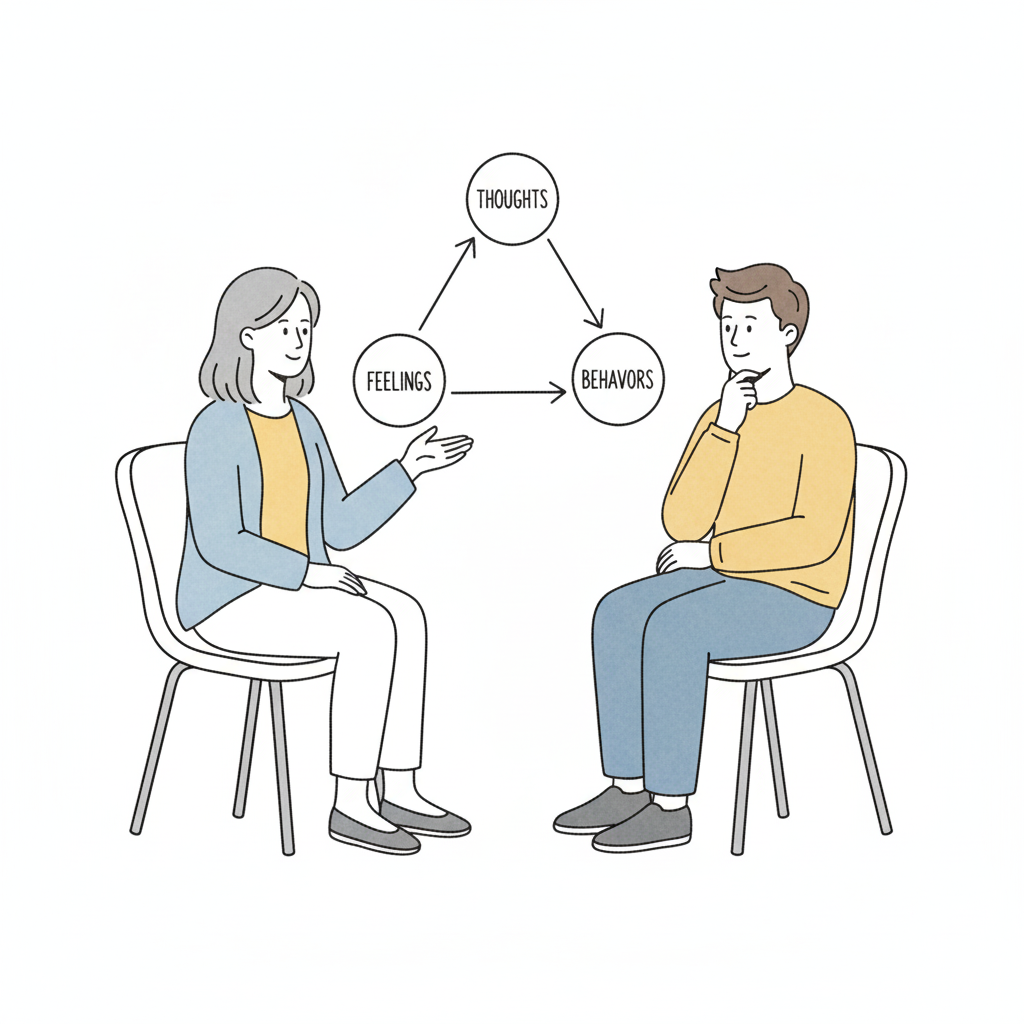
When a client—or even a classmate—asks, “So what exactly is CBT?”, many trainees freeze. You might recall triangles, formulas, or long textbook definitions, but none of them sound natural in conversation.
Explaining the CBT model isn’t about memorizing theory; it’s about helping another person see how their mind, emotions, and actions interact in daily life.
Let’s make it simple—and human.
🌿 Start with the Big Picture
At its core, Cognitive Behavioural Therapy is based on one idea:
It’s not events that distress us, but how we interpret them.
The CBT model helps people notice the invisible connections between:
- Situations — what happens
- Thoughts or beliefs — what we tell ourselves about it
- Emotions and behaviours — how we feel and act as a result
Once those links become visible, they can be questioned, tested, and changed.
🪞 Use Metaphors, Not Diagrams
Metaphors make abstract ideas memorable.
Here are three you can adapt for clients or classroom explanations:
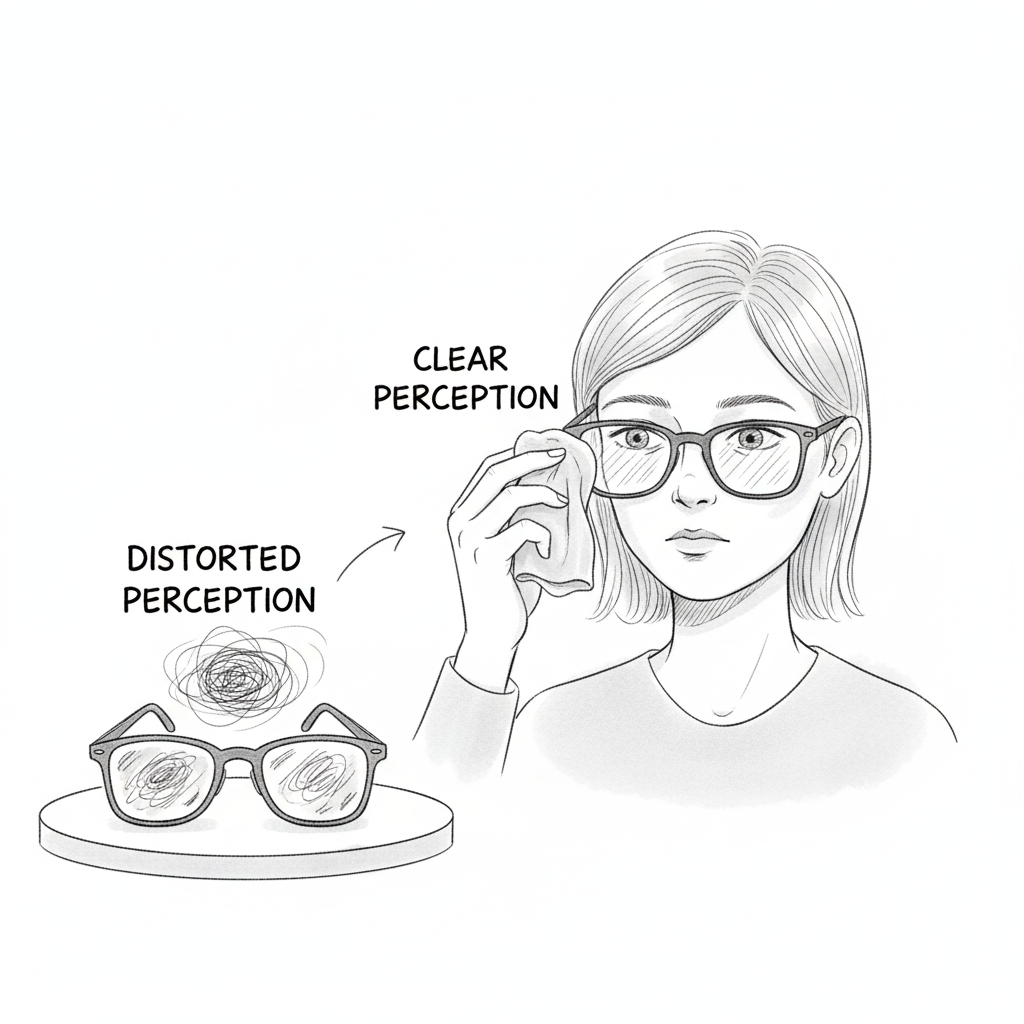
1. The Glasses Metaphor
Our thoughts are like the lenses through which we view the world.
If the lenses are scratched or tinted, everything we see looks darker.
CBT helps us clean or adjust those lenses so reality feels clearer.
2. The Garden Metaphor
Thoughts are seeds; actions are how we water them.
The more we nurture balanced thoughts, the healthier the emotional “garden” becomes.
3. The Domino Metaphor
Each thought sets off an emotional and behavioural domino chain.
Changing even one tile alters the whole sequence.
🔤 Bring in the ABC Formula
To make the model practical, introduce the ABC Formula — a simple framework clients can try on their own:
Then ask:
“What else could you tell yourself instead?”
That one question turns the model into self-reflection rather than theory.
🧩 Demonstrate, Don’t Lecture
You can show the CBT model in under a minute:
- Ask your client or peer to recall a recent stressful event.
- Write down what happened, what they thought, and how they felt.
- Circle the middle column — thoughts — and say,
“That’s where we work in CBT.”
This short exercise turns explanation into insight.
🧠 Keep It Conversational
Avoid jargon like “cognitive restructuring” or “automatic thoughts” at first.
Use simple phrases like:
- “the story we tell ourselves,”
- “how we make sense of what happened,”
- “the meaning we attach to things.”
Once they grasp the concept, introduce professional terms.
✍️ Reflection for Trainees
Think of a time you misread a situation — maybe a friend’s silence, a colleague’s tone, or a social-media comment.
Write your own ABC Formula for that event.
Notice how your feelings shift once you question your belief.
That’s the CBT model — alive, not abstract.
💡 Key Takeaways
✅ Keep it visual and concrete. Use metaphors, not definitions.
✅ Show, then name. Demonstrate before introducing jargon.
✅ Invite participation. Ask for examples from real life.
✅ Practice explaining the model until it feels natural and human.
“Every clear explanation is a small act of therapy itself—because when clients understand the model, they start using it between sessions.”
CTA Section (footer bar)
🧩 Want to practice this skill interactively?
Try the AI Case Generator and see how the ABC Formula applies in real client scenarios.